The Psychology of Swiping: Mastering Your Credit Card Habits
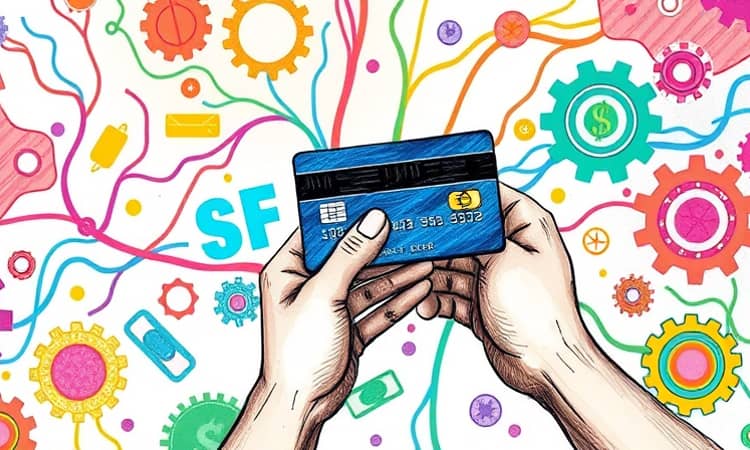
Every time you swipe a credit card, you are engaging in a complex psychological dance that can shape your financial future.
This simple act taps into deep-seated biases and reward systems in your brain, often leading to overspending without you even realizing it.
By understanding these mechanisms, you can start taking back control and making more conscious choices with your money.
This article explores the science behind credit card psychology and provides actionable steps to master your habits.
The Core Psychological Mechanisms
Credit cards exploit several key psychological biases that make spending feel effortless and rewarding.
One of the most significant is the pain of paying, where cash transactions create immediate discomfort, while cards delay this sensation.
This delay reduces psychological barriers, fostering a buy now, pay later mentality that can lead to impulsive decisions.
Here are the main concepts at play:
- Reward activation in the brain: Credit cards sensitize dopamine pathways, mimicking addictive behaviors like gambling.
- Payment coupling: The time gap between purchase and payment lessens the emotional weight of spending.
- Mental gymnastics and gamification: Rewards points and miles rationalize overspending through deductive reasoning lapses.
- Compromise effect reduction: Cards make users focus on product benefits over loss, unlike cash.
- Illusion of unlimited money: High credit limits create a false sense of financial freedom, encouraging indulgence.
These mechanisms work together to drive spending habits that can quickly spiral into debt if left unchecked.
Key Studies and Data Points
Numerous studies have quantified the impact of credit cards on spending behavior.
For instance, research from the Journal of Applied Psychology found that diners tipped approximately 4.3% more when paying with cards.
MIT fMRI studies revealed that credit cards activate reward networks in the brain, specifically sensitizing the striatum.
This table summarizes key insights from pivotal research:
These findings highlight how neural sensitization and behavioral shifts contribute to overspending.
Spending Behaviors and Triggers
Credit cards often trigger specific spending patterns that can be detrimental to financial health.
Impulse buying is a common issue, driven by the pleasure of immediate acquisition without cost consideration.
Emotions like stress, boredom, or joy can amplify this, leading to splurges.
Consider these common behaviors:
- Micro-spending and small purchases: Contactless swipes make tiny buys feel insignificant, accumulating over time.
- Emotional and guilty purchases: Cards ease celebratory or stress-relief spending, while cash is often used for items to avoid regret.
- High-value item liberalization: More liberal swiping on big-ticket items due to decoupled pain from payment.
- Personality differences: Tightwads may underspend with cash but are lured by cards, while spendthrifts overspend regardless.
Recognizing these triggers is the first step toward mindful spending habits that align with your goals.
Industry Strategies Exploiting Psychology
Credit card issuers leverage psychological biases to boost usage and loyalty.
They design rewards programs and personalized offers to tap into safety needs and trust.
Gamification tactics, such as points and miles, negate fees through mental shortcuts.
Here are some common industry strategies:
- Rewards and personalized offers that encourage frequent swiping.
- Convenience marketing that hides the speed of debt accumulation.
- Micro-spending encouragement tailored to habits, especially among younger generations.
- Exploitation of the pain of paying reduction to foster a seamless spending experience.
Understanding these tactics can help you resist persuasive marketing and make informed choices.
Mastering Your Habits: Practical Countermeasures
Taking control of your credit card habits requires intentional strategies grounded in psychology.
Start by using cash for conscious spending to invoke the pain of paying and increase attachment to purchases.
Avoid cards for emotional triggers and set swipe limits to curb impulse buys.
Here are practical steps to implement:
- Track all small swipes to reveal hidden accumulation over time.
- Differentiate cards by purpose, such as one for gas and another for vacations, to condition spending appetites.
- Recognize your personality traits—whether you're a tightwad or spendthrift—for tailored control measures.
- Set up automatic alerts for spending thresholds to maintain awareness.
- Practice mindfulness before swiping, asking if the purchase aligns with long-term goals.
By adopting these habits, you can build financial resilience and reduce reliance on credit.
Broader Context and Implications
The psychology of credit cards extends beyond individual habits to societal and economic factors.
Capitalist incentives push issuers to maximize revenue through psychological levers, risking amplified spending in cashless societies.
This can lead to overspending, debt, and regret, with vulnerable individuals developing addiction-like habits.
Consider these broader implications:
- Shift to digital payments may increase spending cues, such as phone taps triggering appetite.
- Expert views, like those from Drazen Prelec, emphasize how cards disconnect buying pleasure from paying pain.
- Financial therapists highlight that emotions and perception drive swiping behaviors.
- Society must balance convenience with consumer protection to mitigate negative impacts.
Embracing informed financial literacy can empower individuals to navigate these challenges effectively.
By understanding the psychology behind swiping, you can transform your relationship with money and achieve greater financial well-being.
References
- https://www.nerdwallet.com/credit-cards/learn/credit-cards-make-you-spend-more
- https://www.bankrate.com/credit-cards/advice/psychology-of-credit-card-spending/
- https://pmc.ncbi.nlm.nih.gov/articles/PMC12174854/
- https://letskipp.com/blog/7-effective-strategies-for-increasing-top-of-wallet-card-usage-a-deep-dive-into-consumer-psychology/
- https://mitsloan.mit.edu/experts/how-credit-cards-activate-reward-center-our-brains-and-drive-spending
- https://news.nd.edu/news/cash-or-card-consumers-pay-strategically-to-forget-guilty-purchases-study-shows/
- https://www.frontiersin.org/journals/psychology/articles/10.3389/fpsyg.2025.1517460/full
- https://betterworld.mit.edu/spectrum/issues/winter-1999/the-psychology-of-spending/
- https://www.deem.io/blogs/outsmarting-the-psychology-behind-credit-card-spending-plastic-vs-cash
- https://www.indusind.bank.in/iblogs/credit-card/the-psychology-of-credit-card-spending-how-to-avoid-impulse-purchases/
- https://www.cmu.edu/homepage/practical/2007/winter/spending-til-it-hurts.shtml